
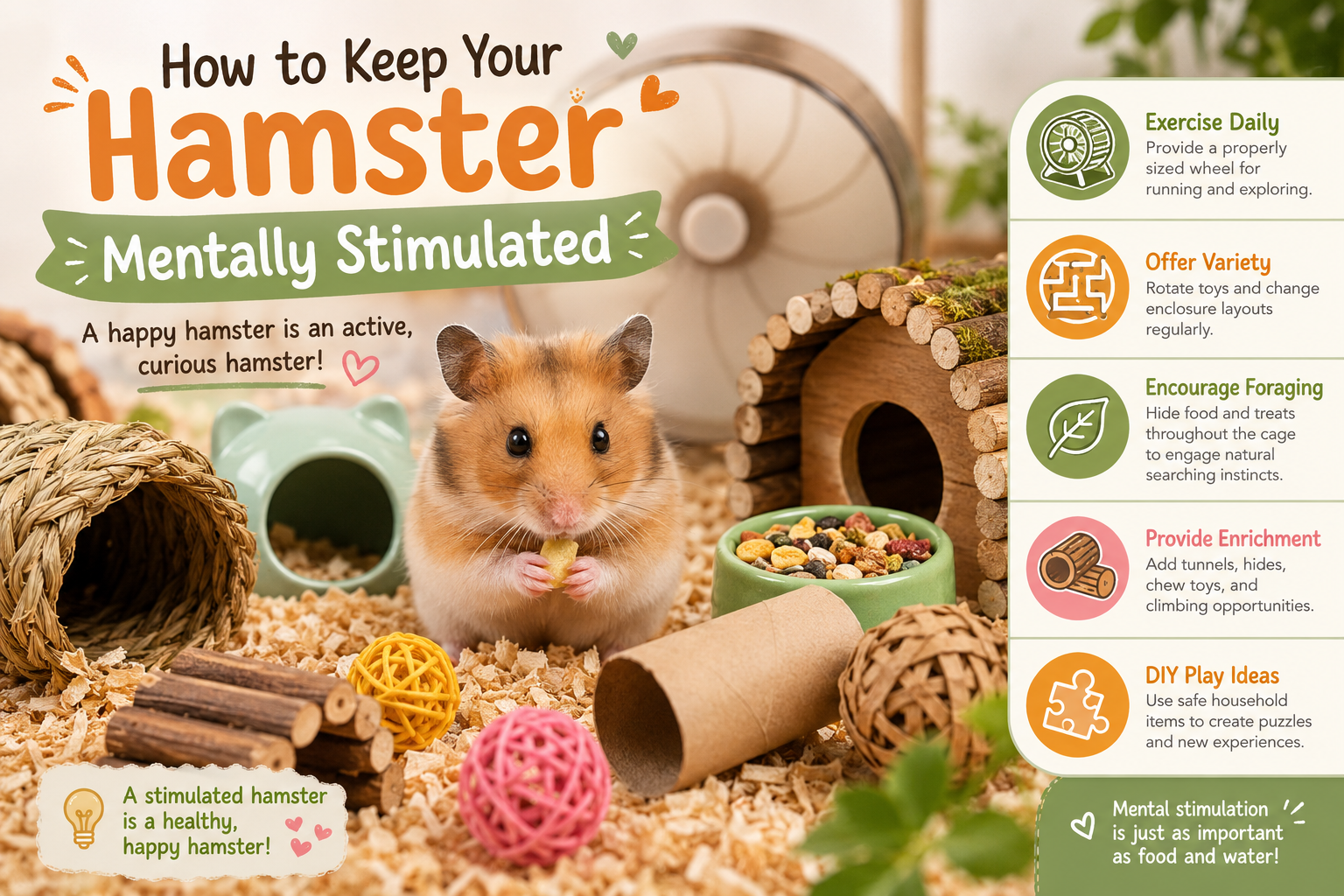
How to Keep Your Hamster Mentally Stimulated
It All Begins Here
Hamsters may be small, but they are incredibly intelligent and curious animals. In the wild, they spend hours every night digging burrows, searching for food, exploring new environments, and avoiding predators. A pet hamster still has these natural instincts, even in the comfort of your home. Without opportunities to explore and solve problems, hamsters can become bored, stressed, and even develop unhealthy behaviors.
Providing mental stimulation is just as important as providing fresh food, clean water, and a safe habitat. By enriching your hamster's environment, you'll encourage natural behaviors, improve their overall well-being, and create a happier, healthier pet.
Why Mental Stimulation Matters
A hamster's brain is wired for exploration. Wild hamsters can travel several miles each night while searching for food and building their underground homes. Although pet hamsters don't need to survive in the wild, they still crave activities that challenge both their minds and bodies.
A mentally stimulated hamster is more likely to:
Stay active and maintain a healthy weight
Display natural digging and foraging behaviors
Experience less stress and anxiety
Be more confident during handling
Avoid boredom-related behaviors such as excessive bar chewing or repetitive pacing
Keeping your hamster engaged every day contributes to a longer, healthier, and more fulfilling life.
Create an Enriching Habitat
Your hamster's enclosure should be more than just a cage—it should be a place to explore.
Provide plenty of space with multiple areas for sleeping, eating, climbing, and hiding. Rearranging items every few weeks introduces new experiences without causing unnecessary stress.
Great habitat additions include:
Cork logs
Wooden bridges
Hideouts
Climbing platforms
Natural tunnels
Safe chew toys
Changing the layout occasionally encourages exploration and satisfies your hamster's natural curiosity.
Encourage Natural Foraging
One of the easiest ways to stimulate your hamster is by making them work for their food.
Instead of placing all food in a bowl, scatter a portion of their daily diet throughout the enclosure. Hide treats inside tunnels, beneath bedding, or in small cardboard tubes.
Foraging activities encourage:
Problem-solving
Exploration
Physical activity
Natural food-searching behaviors
Just be sure to remove uneaten fresh foods before they spoil.
Provide Plenty of Safe Chew Toys
Hamsters' teeth grow continuously throughout their lives. Chewing keeps their teeth at a healthy length while also providing important mental stimulation.
Safe chew options include:
Apple wood sticks
Untreated willow branches
Loofah chews
Natural grass toys
Cardboard tubes
Wooden blocks made specifically for small pets
Avoid painted wood, treated lumber, or anything with glue or toxic finishes.
Add Tunnels and Burrowing Opportunities
Hamsters naturally spend much of their lives underground.
Offer deep bedding—at least 8 to 10 inches whenever possible—so they can dig elaborate tunnel systems.
Additional enrichment can include:
Paper tunnels
Cork tunnels
Hay tunnels
Cardboard tubes
Burrowing chambers
Watching your hamster create its own network of tunnels is one of the most rewarding parts of hamster ownership.
Rotate Toys Regularly
Instead of filling the enclosure with every toy you own, rotate enrichment items every week or two.
Introducing a few "new" toys keeps your hamster interested without overwhelming them.
Toy rotation also helps extend the life of enrichment items while keeping the environment fresh and exciting.
Use an Exercise Wheel
An appropriately sized exercise wheel is one of the most important forms of daily enrichment.
Choose a solid-surface wheel large enough to allow your hamster to run with a straight back.
Avoid wire or mesh wheels, which can injure tiny feet and legs.
Hamsters often run several miles each night, making a quality exercise wheel essential for both physical and mental health.
Offer Safe Exploration Outside the Habitat
Supervised playtime outside the enclosure provides valuable mental stimulation.
A secure playpen filled with tunnels, boxes, hideouts, and toys allows your hamster to investigate new environments safely.
Never allow free roaming in your home, as hamsters can squeeze into tiny spaces and quickly disappear.
Always supervise out-of-cage adventures.
Build DIY Enrichment Activities
You don't need expensive toys to keep your hamster entertained.
Simple household items can become excellent enrichment opportunities.
Try creating:
Cardboard mazes
Toilet paper tube puzzles
Egg carton treat boxes
Paper bags filled with shredded paper
Dig boxes with hamster-safe substrates
Always remove tape, staples, glue, and anything your hamster could accidentally ingest.
Watch for Signs of Boredom
Your hamster may need additional enrichment if you notice:
Repeated bar chewing
Constant pacing
Excessive sleeping outside normal hours
Lack of interest in toys
Overgrooming
Attempts to escape the enclosure
Adding new activities and increasing habitat complexity can often resolve these behaviors.
Build Trust Through Gentle Interaction
Mental stimulation also comes from positive experiences with their owner.
Allow your hamster to approach you voluntarily rather than forcing interaction.
Offer treats from your hand, speak softly, and handle them gently. Short, positive sessions help build confidence and strengthen your bond over time.
Final Thoughts
Keeping your hamster mentally stimulated is one of the best ways to support a long, healthy, and happy life. By providing opportunities to forage, chew, burrow, explore, and solve simple challenges, you'll encourage the natural behaviors that make hamsters such fascinating companions.
At PetSembly, we believe every small pet deserves an enriching environment that keeps both their body and mind active. With thoughtful toys, engaging habitats, and plenty of opportunities to explore, your hamster can thrive every single day.